If you’ve ever walked away from a tantrum thinking, “I sounded just like my parents, and I swore I wouldn’t,” you’re not alone. Jiujitsu-inspired parenting offers a different path. Instead of overpowering kids with volume or punishment, jiujitsu parenting techniques use leverage over force, guiding energy instead of fighting it.
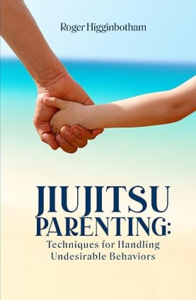
Below are seven gentle-force strategies drawn from Roger Higginbotham’s Jiujitsu Parenting: Techniques for Handling Undesirable Behaviors that you can start using today.
- Pause and Breathe Before You “Step on the Mat”
In jiujitsu, panicking burns energy and loses the match. Parenting is the same.
Before responding to whining, backtalk, or a meltdown:
- Take one slow breath in and out.
- Remind yourself: “My job is to guide, not to win.”
That small pause keeps you from reacting and lets every other technique actually work.
- Name the Feeling to Calm the Storm
A core gentle parenting move is labeling emotions:
“You’re really frustrated that the game is over.”
“You’re mad I said no to more screen time.”
When children feel seen, their nervous system starts to settle. This “tactical empathy” is the foundation of all jiujitsu parenting techniques.
- The Redirect: Aim the Energy Somewhere Useful
Instead of saying, “Stop whining,” try shifting their focus:
- “You really wanted the red cup. Do you want to pour the water yourself or set the table?”
- “You’re bored. Want to help me stir the sauce or pick the music?”
You’re not ignoring the behavior; you’re redirecting it into something acceptable.
- The Hold: Calm, Clear Boundaries That Don’t Budge
In jiujitsu, a good hold is firm but not violent. In parenting, it sounds like:
- “Screen time is over at 7:30. You may turn it off, or I’ll help you.”
- “We don’t hit. You may be mad, but you may not hurt.”
No lectures, no bargaining, just a steady boundary delivered in a low, calm voice.
- The Roll: Bounded Choices to Avoid Power Struggles
Rather than “Do it now,” offer two options inside your limit:
- “Homework now or after a 10-minute snack, your choice.”
- “Bath first or pajamas first?”
Kids get a sense of control, and you keep the frame. This is leverage, not force.
- Set the Mat: Use Routines to Prevent Meltdowns
Jiujitsu fighters prepare their space; parents can too. Predictable routines reduce many undesirable behaviors before they start:
- Same steps every night for bedtime
- Clear “first–then” patterns (e.g., “First homework, then games”)
Structure is one of the most underrated jiujitsu parenting techniques.
- Repair and Reflect After the Match
Nobody wins every round, parents included. After things cool down, circle back:
- “Earlier was rough. Next time you’re that mad, what could we try instead?”
- If you yelled: “I didn’t handle that well. I’m working on staying calmer too.”
Repair teaches responsibility, models humility, and builds trust.
Ready to Turn Chaos into Cooperation?
If these gentle-force ideas resonate with you, they’re just the beginning. Jiujitsu Parenting: Techniques for Handling Undesirable Behaviors goes deeper into the Redirect, Hold, and Roll framework, developmental stages, and real-life case studies to help you handle tantrums, defiance, aggression, and more, without yelling or bribes.
Explore more jiujitsu parenting techniques and start reshaping your home’s “mat” into a calmer, more connected place.