
Every parent and educator has been there: a small “no” turns into a full-body meltdown in seconds. In those moments, it’s easy to feel powerless. The good news? Once you understand how to de-escalate toddler tantrums with timing, tone, and a few simple scripts, you can often turn the storm around in under 90 seconds.
These gentle, jiujitsu-inspired tactics draw on Roger Higginbotham’s Jiujitsu Parenting approach: leverage over force, calm over control.
Why 90 Seconds Matters
A tantrum is your child’s nervous system flooding. For about a minute or so, they’re in “fight, flight, or freeze” mode. Logic won’t land. Your job isn’t to argue, it’s to help them come back down.
Think of the first 90 seconds as your “de-escalation window.” What you do (and don’t do) here determines whether things cool off or spiral.
Step 1: Pause Before You Respond (0–10 Seconds)
When the scream starts, most adults go straight into lecture or threat mode. That usually makes it worse.
● Take one slow breath in through your nose, out through your mouth.
● Relax your shoulders.
● Say nothing for a beat.
If you’re working on how to de-escalate toddler tantrums, this tiny pause is your first tactic. It keeps you from matching their intensity and gives you space to choose your next move.
Step 2: Validate the Feeling, Not the Behavior (10–45 Seconds)
Next, name what your child is feeling in simple language:
● “You’re really mad that we turned off the TV.”
● “You’re sad we had to leave the playground.”
● “You’re frustrated that it’s not your turn.”
You’re not approving the yelling or kicking, you’re saying, “I see you.” This pause-then-validate sequence calms the emotional brain and lowers defenses quickly.
Step 3: Use a Calm, Low Tone to Hold the Boundary (45–75 Seconds)
Now blend empathy with a clear limit, using a slower, softer voice than usual:
● “You can be mad. You may not hit.”
● “It’s okay to cry. We’re still going home now.”
● “You really want more candy. The answer is still no.”
Key points:
● Keep sentences short.
● Avoid lectures (“How many times have I told you…?”).
● Repeat the same line instead of explaining it three different ways.
This is gentle-force parenting: firm boundary, calm delivery.
Step 4: Redirect the Energy with a Simple Choice (75–90 Seconds)
As the intensity drops even a little, offer a bounded choice to move things forward:
● “Do you want a hug or some water first?”
● “Walk by yourself or hold my hand?”
● “Carry your teddy or your backpack?”
Redirection doesn’t bribe or distract away the feeling, it gives your child a small sense of control inside your limit.
A Quick 90-Second Script You Can Steal
1. Pause, breathe.
2. “You’re really upset we turned off the show.”
3. “You can be mad. You may not throw toys.”
4. “We’re done with screens for today.”
5. “Do you want to sit on my lap or on the couch while you calm down?”
Practice this a few times, and you’ll start to feel more confident about how to de-escalate toddler tantrums without yelling, threats, or bribes.
Ready to Go Deeper Than Survival Mode?
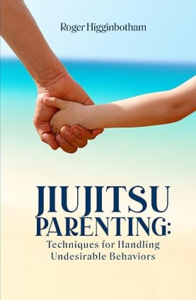
These de-escalation tactics are just the beginning. Roger Higginbotham’s Jiujitsu Parenting: Techniques for Handling Undesirable Behaviors framework dives deeper into timing, tone, redirection, and gentle-force strategies for everyday challenges, from tantrums to defiance and beyond.
Visit rogerhigginbotham.com to explore more jiujitsu-inspired parenting tools, learn practical scripts, and start turning daily meltdowns into moments of real connection.